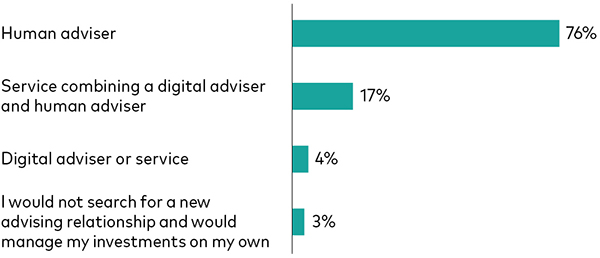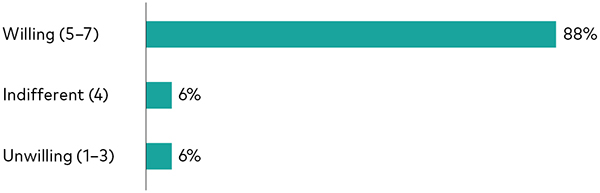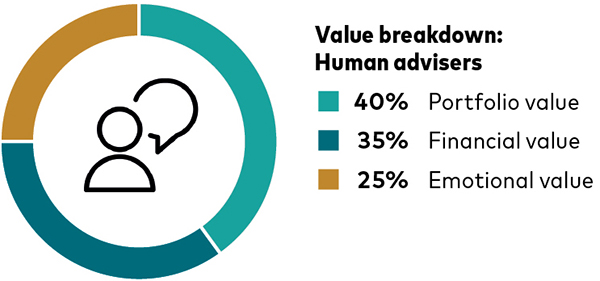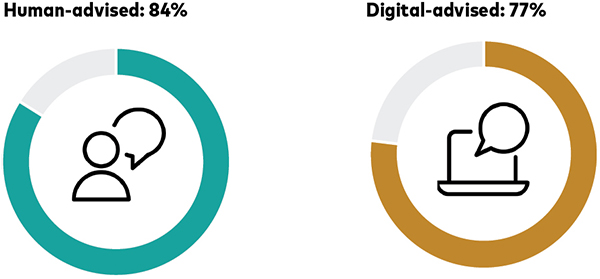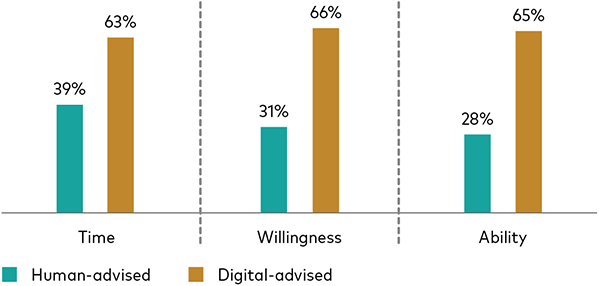
Notes: In this figure, the sample includes all respondents. In total, 1,352, 1,354, and 1,351 human-advised clients and 341, 338, and 340 digital-advised clients answered the time, willingness and ability questions, respectively. They could rate the statements from 0 (“Not at all agree”) to 10 (“Completely agree”). They were considered to agree with the statement if their rating was between 8 and 10.
Source: Vanguard, 2021.
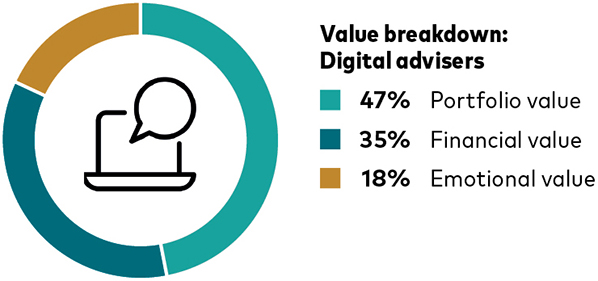
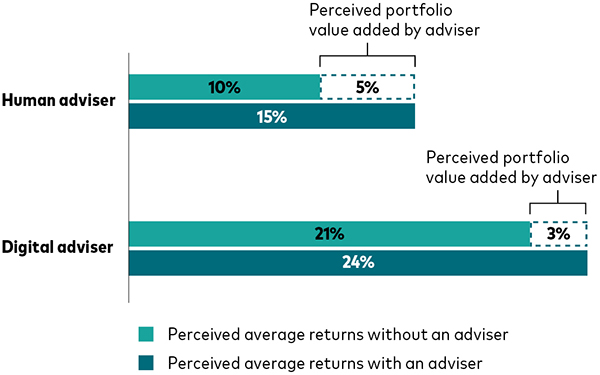
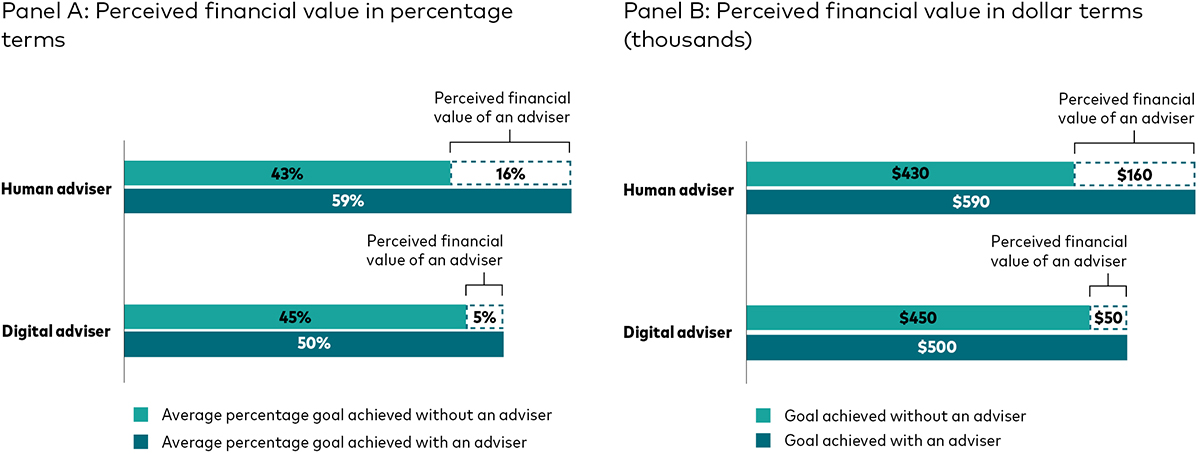
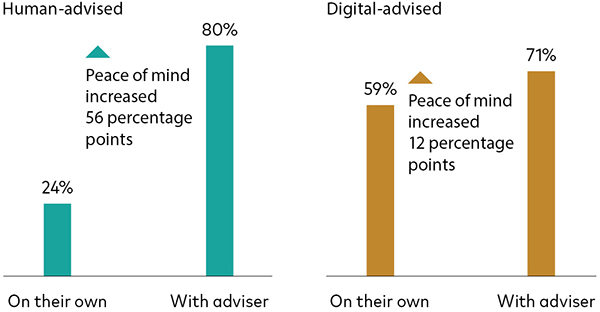
It is possible that digital-advised investors may have less-complex financial needs. Digital-advised clients tend to be much younger and therefore potentially have fewer financial goals. Whilst the research did not study this element further, it digital-advised clients perceive less value from advice consider switching to a human adviser in the future, their financial situation become more complex.
Investor preference: breaking down advice into the sum of the parts
Which services within advice do investors prefer to be delivered by a human and which are best delivered by automation?
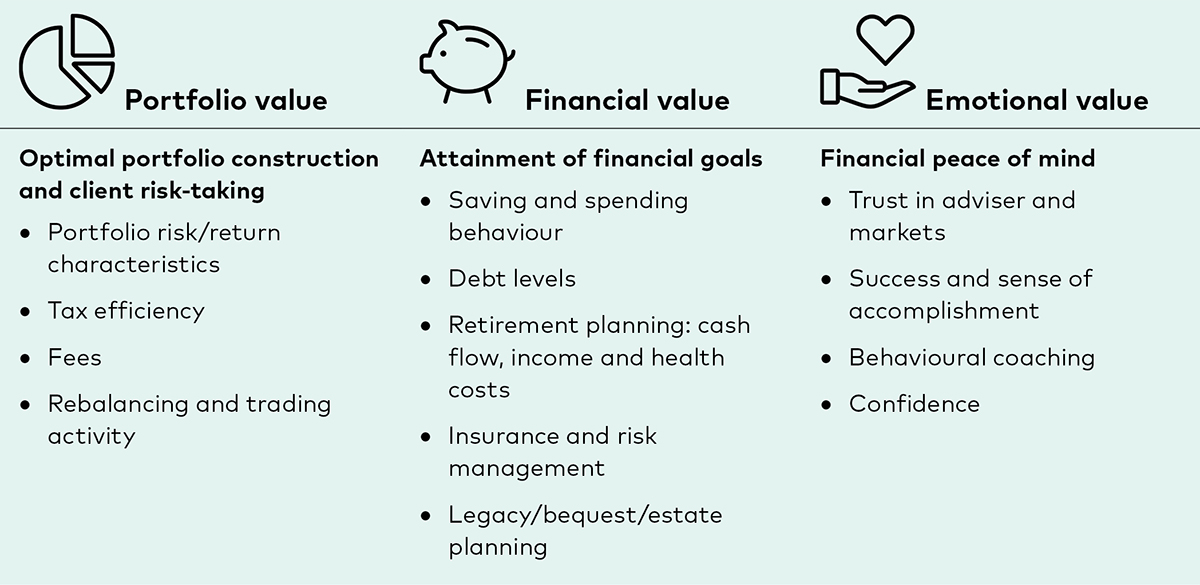
There is a strong predilection for human delivery of many advice services; it is preferred over digital delivery by at least 40 percentage points. Most of these preferences align to the emotional and financial success components of the value-of-advice framework rather than portfolio dimension.
Services that investors prefer to be delivered digitally are related to functional tasks and portfolio management, such as “manage taxes/capital gains efficiently” and “diversify investments”. This aligns with research that stresses how work related to portfolio outcomes has been commoditised and how advisers should focus on services in which humans excel, such as behavioural coaching.
Optimising human and digital delivery for business growth
Knowing relative preference for is important as:
- It helps advisers optimise their service and ensure they are pursuing the right clients based on their service model.
- Advisers’ time is a scarce resource, so it is beneficial for them to understand which services can be outsourced to automation to help scale their practices in a cost-efficient manner.
Our research (see Figure 10 below) shows that clients prefer emotional and financial outcomes to be delivered by humans and portfolio and functional tasks digitally. The margin for this preference in the emotional and financial areas is large.
FIGURE 10. Human advisers should focus on delivering emotional and financial outcomes while automating portfolio construction and functional tasks
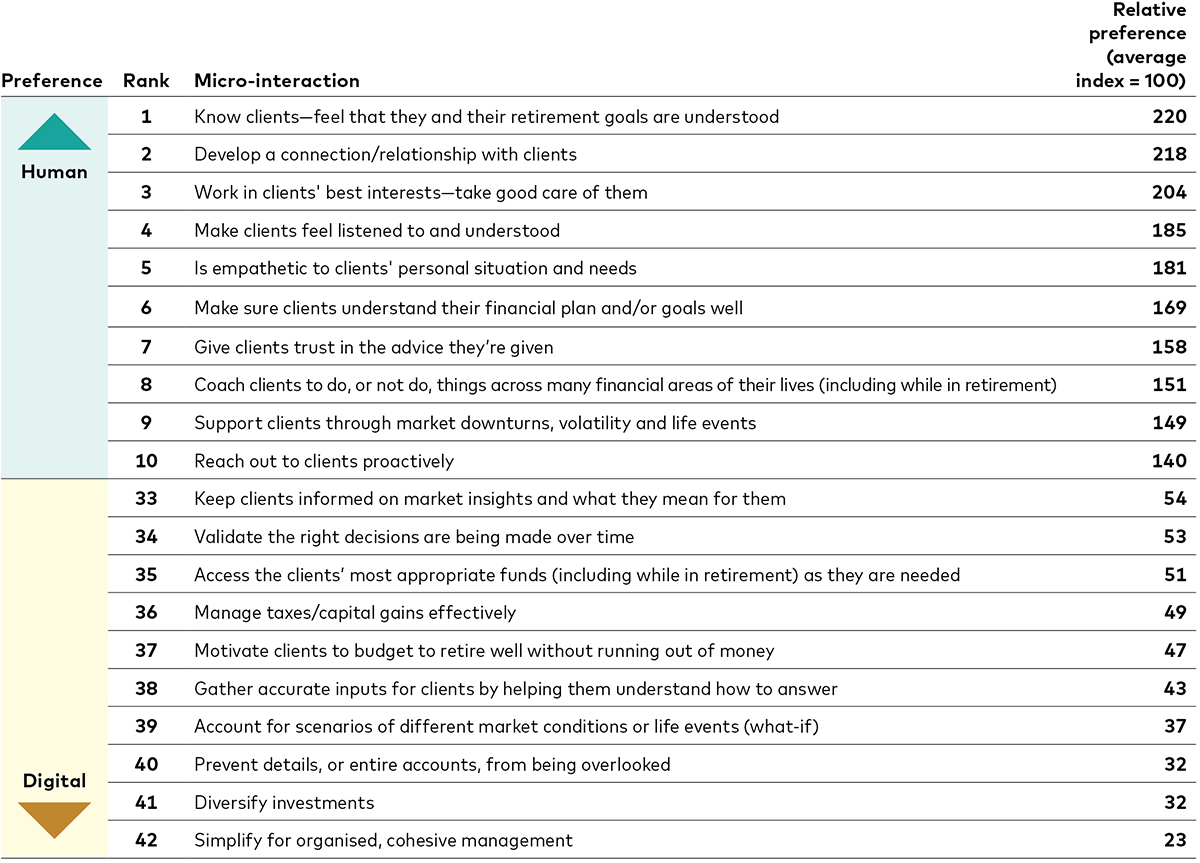
Notes: In this figure, all 1,518 clients answered the question. They were presented with four micro-interactions / relative-preference scores at a time, 12 times in different screens, and asked which they most preferred to be delivered by a human or digital service so that we could rank each micro-interaction as well as relative preferences. The statistical technique used to calculate the rank and relative preference scores is called MaxDiff. The relative-preference score should be interpreted as follows. Take the micro-interactions ranked #8—“Coach clients to do, or not do, things across many financial areas of their lives (including while in retirement),” and #36—“Manage taxes/capital gains effectively,” for example. Their relative-preference scores are 158 and 49. This means that investors prefer that micro-interaction #8 be delivered by a human 3.2 times (158 divided by 49) more than micro-interaction #36.
Sources: Vanguard and Escalent, 2021.
One of the most discussed new trends in advice is what type of delivery millennials would prefer. Our research deduced that demographics are not an important factor when considering relative preference for delivery.
Contrary to popular belief, we do not find that millennials have distinct preferences that differ from other generations when it comes to automaton of service within advice. do not need to customise their offerings based on perceived generational differences.
Key points
The research findings represent good news for advice of all forms, because investors perceive substantial value across portfolio, financial and emotional outcomes.